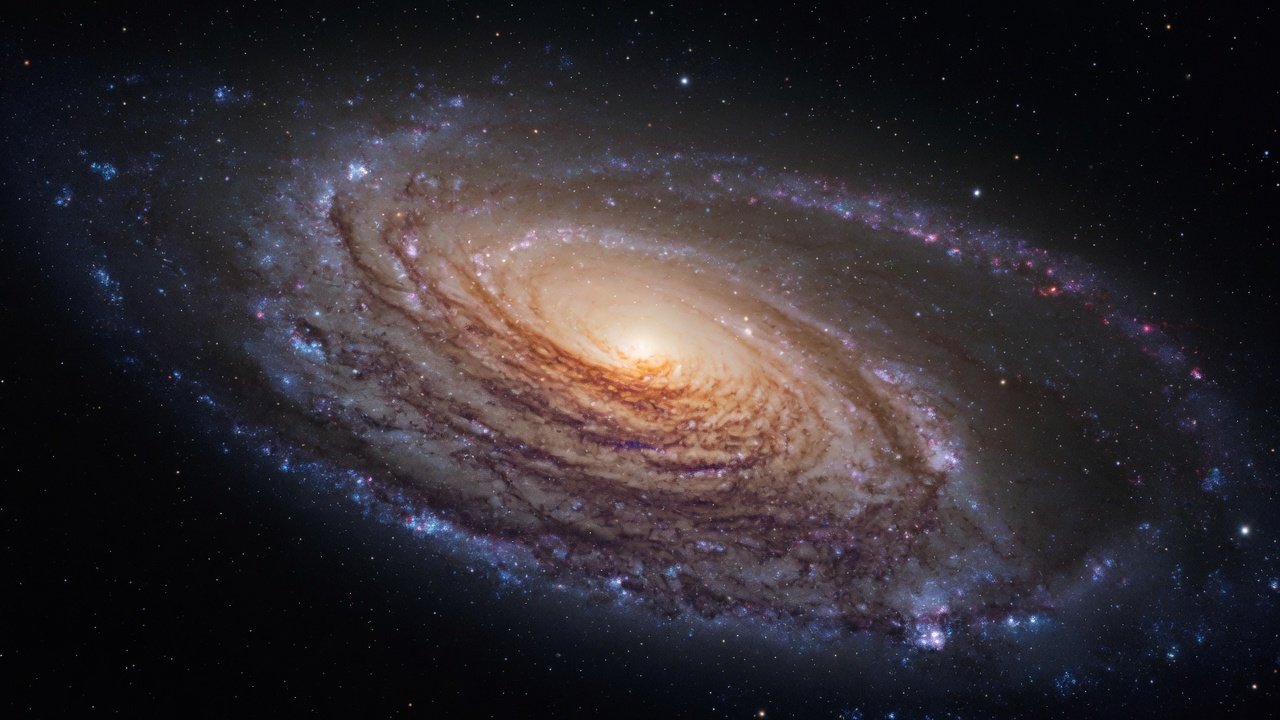
Bennu is a half-kilometer pile of primordial rubble that may have delivered the chemistry of life — and that has a small but non-trivial chance of delivering itself into the Pacific. Few objects in the solar system carry both roles at once: time capsule from the early solar system and case study in planetary defense. We now hold 121.6 grams of it in laboratories on Earth.
The sample
101955 Bennu is a B-type carbonaceous asteroid, roughly 490 meters across, and not a monolith — it's a rubble pile, an aggregate of boulders and dust loosely bound by gravity so weak you could jump off it. NASA's OSIRIS-REx spacecraft touched its surface in October 2020 and found it behaved less like rock and more like a ball pit; the sampling arm sank in nearly half a meter before back-thrusting away. The capsule landed in the Utah desert on September 24, 2023, carrying 121.6 grams — over twice the mission requirement.
The analysis has been quietly extraordinary. The sample contains hydrated minerals — phyllosilicates that only form in liquid water — plus magnesium-sodium phosphates and evaporite salts that point to an ancient briny parent body. The organics list includes amino acids and all five nucleobases used by DNA and RNA. None of this is life. All of it is the inventory of prebiotic chemistry, found in pristine material that never touched Earth's atmosphere or biosphere. Asteroids like Bennu plausibly seeded the early Earth with exactly this stock.
The impact problem
Bennu is also one of the highest-rated impact risks in the catalog. Its orbit crosses Earth's, and the cumulative impact probability through the year 2300 is about 1 in 2,700 — with the single most likely date being September 24, 2182, exactly 159 years after its sample came home. To be clear: a 99.96% chance of missing is the headline, and the uncertainty narrows as tracking improves. But a 490-meter rubble pile at orbital velocity is a regional catastrophe, and Bennu is the object that forced precise modeling of the Yarkovsky effect — the tiny thermal thrust from sunlight re-radiating off a spinning asteroid — because over centuries, that whisper of force decides hit or miss.
Why it matters to a builder
Bennu is ground truth. Every remote-sensing model of carbonaceous asteroids — spectra, density, water content — can now be checked against actual material, which is how you turn telescope data into a prospecting instrument for thousands of similar objects. It's also a systems lesson in long-horizon risk: a 1-in-2,700 probability over centuries is exactly the class of threat that institutions handle badly and engineers must handle anyway. Measure early, model the small forces, and the 2182 problem becomes a 2080 maneuver.