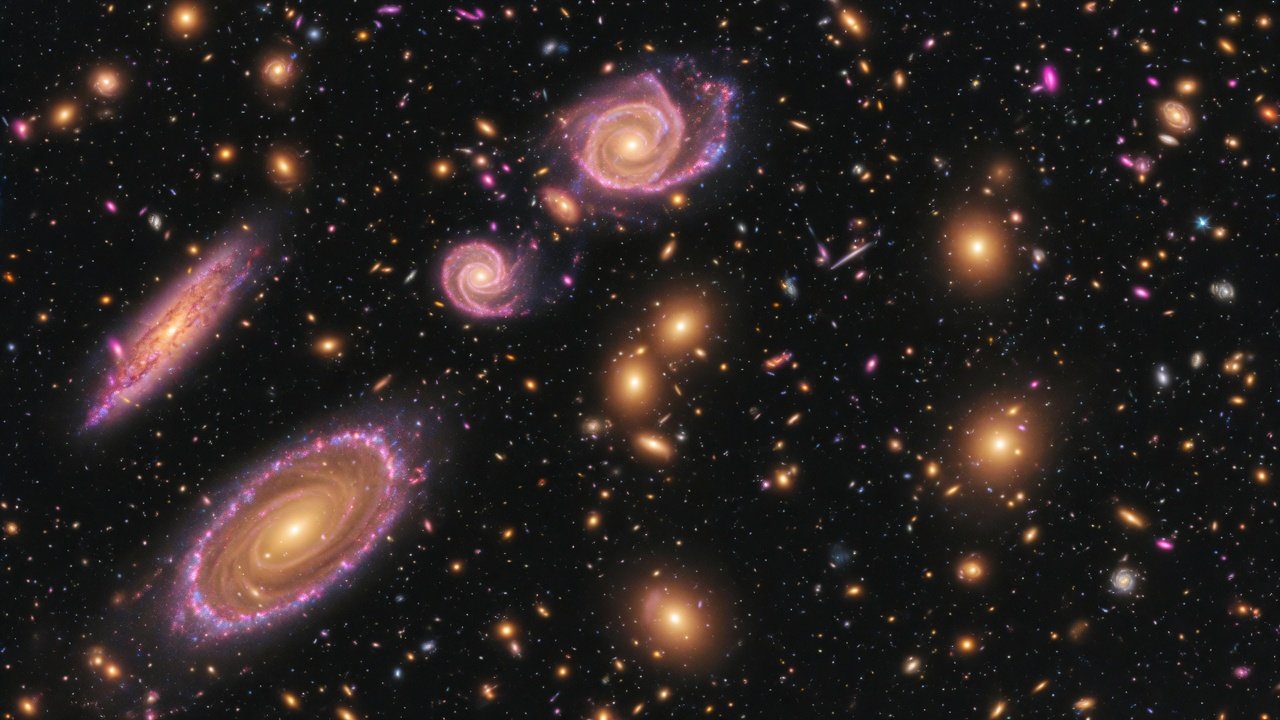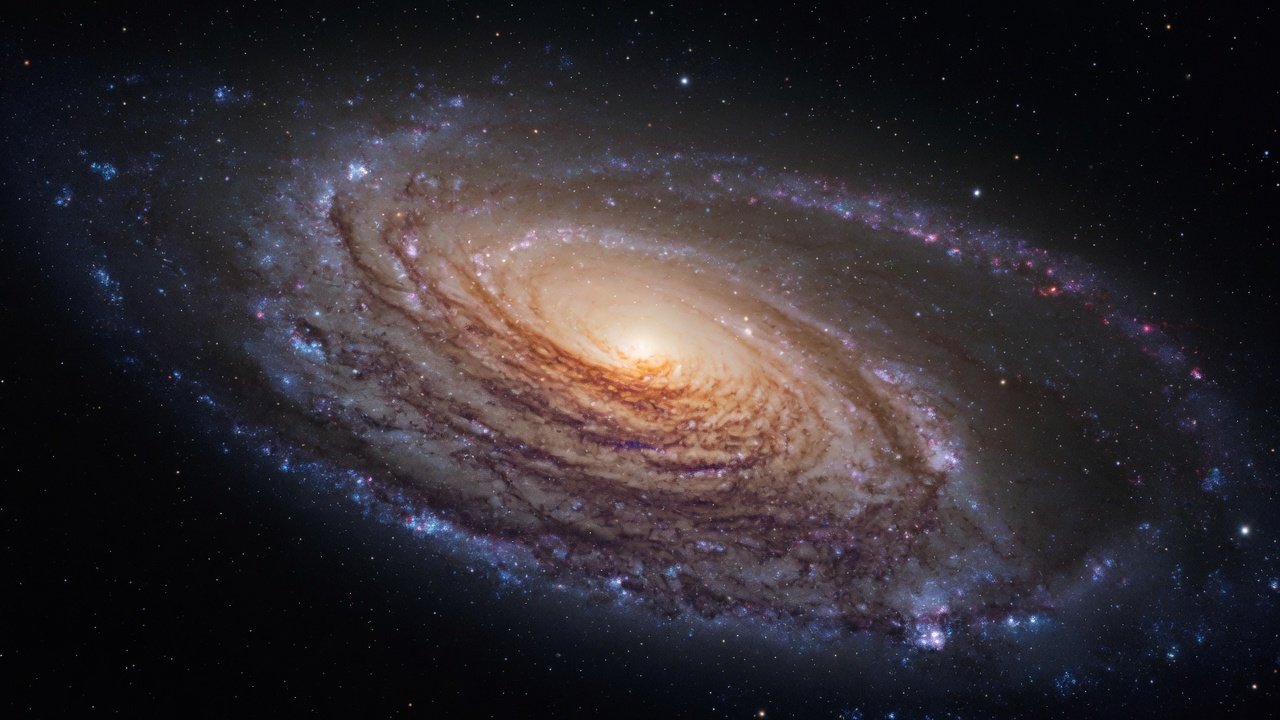
30 cards and growing — every session adds more. Each card holds verified facts, a deep read, and prompts designed to be pasted into any AI agent. Knowledge built for humans and machines at once.
The most recognizable pattern in the sky — seven bright stars spanning 245 to 1,300+ light-years, aligned only from Earth's point of view, plus a stellar nursery you can see with the naked eye.
Open cardThe sky's most useful asterism: two of its stars point to Polaris, five of its seven stars are a genuine moving group, and it guided people escaping slavery north as the Drinking Gourd.
Open cardThe smallest of the 88 constellations carries the most weight per star: it finds the south celestial pole, anchors Aboriginal sky knowledge, and flies on five national flags.
Open cardThe W in the northern sky — circumpolar, self-announcing, and home to Cassiopeia A, the brightest radio source in the sky beyond our solar system, plus the 1572 supernova that broke the idea of an unchanging heaven.
Open cardA G2V main-sequence star holding 99.86% of the solar system's mass — a self-regulating fusion reactor that has run stable for 4.6 billion years.
Open cardA red supergiant so large it would swallow the asteroid belt — a dying star whose 2019 'Great Dimming' triggered supernova speculation, and whose eventual explosion will be visible in daylight.
Open cardThe brightest star in the night sky scheduled ancient Egypt's calendar — and its invisible companion, predicted from a wobble in 1844, became the first white dwarf ever found.
Open cardThe nearest star to the Sun is invisible to the naked eye — a flare-prone red dwarf 4.25 light-years away with a rocky planet in its habitable zone, and a fuel tank that outlasts every other kind of star.
Open cardA ~226 km metal-rich world — possibly the exposed core of a shattered protoplanet. NASA's Psyche spacecraft arrives in 2029 to find out what it actually is.
Open cardA carbonaceous rubble pile that gave us 121.6 grams of pristine early solar system — organics, hydrated minerals, and a 1-in-2,700 impact question for 2182.
Open cardThe main belt's dwarf planet: ~940 km across, roughly a quarter water by mass, with salty brines still seeping to its surface. The belt's natural depot.
Open cardThe first asteroid ever orbited and landed on — in 2001, with a spacecraft never designed to land. Proof that NEA prospecting is solved, decades-old engineering.
Open cardForged in neutron-star collisions, delivered to Earth's crust by late impacts. Gold's scarcity is an astrophysical accident — all of it ever mined fits in a ~22 m cube.
Open cardThe fusion endpoint and the most load-bearing element of civilization. Iron cores trigger supernovae; iron asteroids are exposed hearts of shattered protoplanets.
Open cardEarth's PGMs mostly sank into the core; some asteroids carry concentrations above the richest mines. The catch: return too much and you crash the price.
Open cardWater is propellant, shielding, and life support in one molecule. The near-term asteroid-mining business case is volatiles for in-space refueling — not platinum for Earth.
Open card0.38 g, a whisper of atmosphere, and the first place humanity made oxygen on another world. The case for Mars is a systems-engineering problem, not a romance.
Open card2.5x the mass of every other planet combined — the solar system's gravitational architect, debris shield (debatably), and free momentum source for every outbound mission.
Open cardOur barred spiral home: 100,000+ light-years across, 100-400 billion stars, a 4-million-solar-mass black hole at the center — and we've mapped a sliver.
Open cardThe nearest large spiral, a trillion stars, 2.5 million light-years out — and the long-promised collision with us may actually be a coin flip.
Open cardEvery element has a spectral barcode. Reading starlight revealed what stars are made of, found helium before Earth did, and proved the universe expands.
Open cardOrbits are perpetual falling. Kepler described them, Newton explained them, Einstein corrected them — and delta-v, not distance, is the true cost of going anywhere.
Open cardHow stars burn: quantum tunneling lets hydrogen fuse at 'only' 15 million K, releasing 0.7% of mass as energy — and the ladder ends at iron.
Open cardThe Big Bang made hydrogen and helium. Stars forged everything up to iron. Exploding stars and colliding neutron stars made the rest — including you.
Open cardDoing without gravity what the Sun does with it: three confinement strategies, one 2022 ignition milestone, 35 nations building ITER — and, as of 2026, still zero net electricity to any grid.
Open cardStars were humanity's first clock, compass, calendar, and database — and the literal supply chain for every atom in you heavier than helium. The philosophy layer, kept honest by physics.
Open cardLaunched 1977 with 69 KB of memory, now the farthest human-made object — still returning interstellar data on a shrinking power budget, patched remotely across a 22-hour light delay in 2024.
Open cardContinuously crewed since November 2000 — a football-field-sized laboratory at 28,000 km/h where five space agencies kept cooperating through every geopolitical crisis since 1998.
Open card