Ursa Major, the Great Bear, is the third-largest constellation in the sky and home to the most useful seven stars in the northern hemisphere: the Big Dipper. It is also the rare exception to the rule that constellations are optical illusions — most of the Dipper's stars really do travel together.
A real group, with two impostors
The five middle stars of the Dipper — Merak, Phecda, Megrez, Alioth, and Mizar — belong to the Ursa Major Moving Group, a loose stream of stars born from the same cluster roughly 300 million years ago, now drifting through space on shared trajectories about 80 light-years from Earth. The two ends of the Dipper are the outsiders: Dubhe, a K-type giant at roughly 123 light-years, and Alkaid, a hot B-type star at about 104 light-years, are both moving in different directions. Over roughly 100,000 years, the pattern will visibly deform — the ends will swing away while the middle holds together. Most constellations are pure line-of-sight coincidence; the Dipper is about seventy percent a real system.
Doubles all the way down
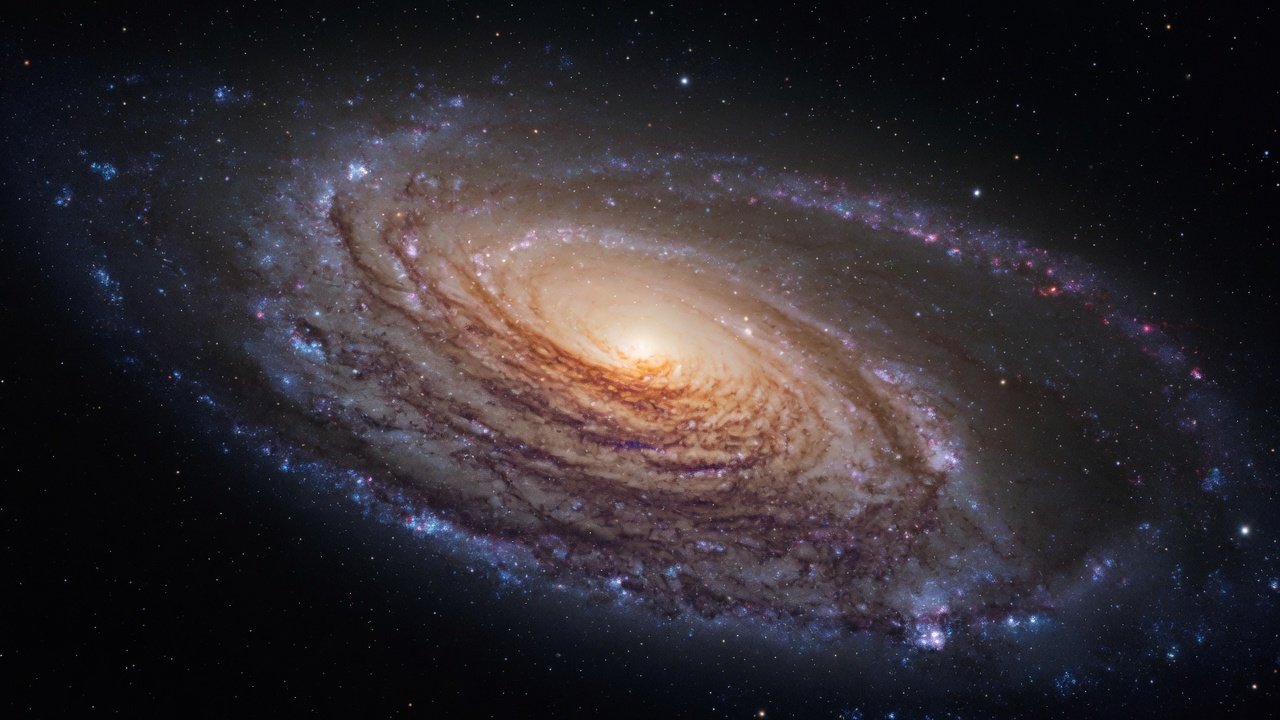
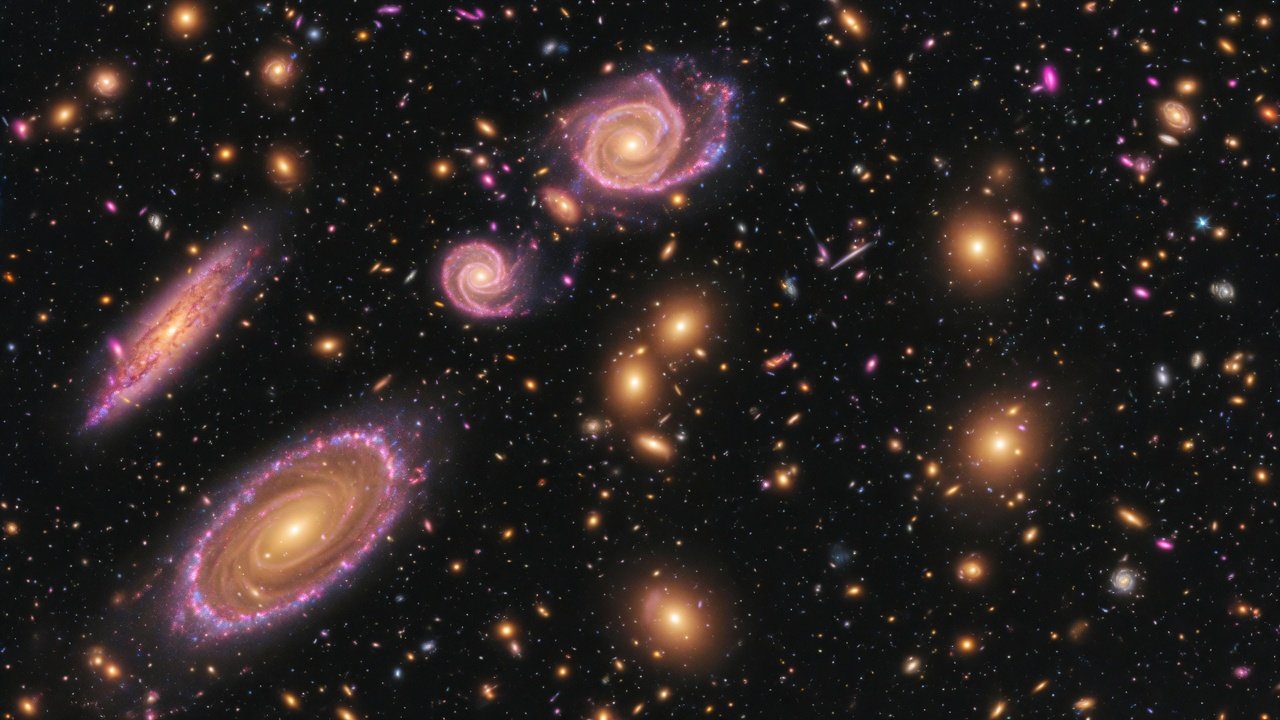
Look at Mizar, the bend in the handle, and a sharp eye picks out faint Alcor beside it — an eyesight test used for centuries. A telescope splits Mizar itself into two stars, making it the first telescopic binary ever recorded, in the early 1600s. Spectroscopy later split each of those again, and Alcor turned out to have a companion too: what looks like one star is a system of six. Ursa Major also hosts a pair of showpiece galaxies about 12 million light-years away — M81, a grand-design spiral, and M82, a starburst galaxy churning out stars roughly ten times faster than the Milky Way after a close pass between the two.
Bear, Plough, Sages, and the Drinking Gourd
The bear identification is strikingly widespread — ancient Greece (the nymph Callisto, transformed by a jealous goddess and placed in the sky), and independently among several Indigenous North American peoples, which has led some researchers to suggest the story is many thousands of years old. Britain sees the Plough; Germany a wagon; India the Saptarishi, the Seven Sages. The most consequential reading is recent: enslaved people escaping north on the Underground Railroad in the 1800s knew the Dipper as the Drinking Gourd. "Follow the Drinking Gourd" was not a metaphor — it was an operational instruction encoding a bearing toward free states.
The pointer stars
The Dipper's front edge, Merak to Dubhe, is the standard route to Polaris: extend that line about five times its own length and you land on the North Star, which sits within roughly a degree of the north celestial pole. Polaris's altitude above the horizon equals your latitude — the basis of centuries of navigation. From mid-northern latitudes the Dipper is circumpolar, never setting, so the pointer is available every clear night of the year.
Why it matters to a builder
The Dipper is a lesson in verifying structure instead of assuming it. Five of its stars share provenance and motion; two just happen to be passing through the frame. That is what real systems look like — genuinely coupled components mixed with coincidental neighbors, and you cannot tell them apart by appearance, only by measuring how they move over time. And the pointer stars model good interface design: nobody navigates by memorizing Polaris in isolation. They find an unmistakable landmark and follow a simple, repeatable rule from it. When you document a system, build pointers — obvious entry points with mechanical instructions to the thing that actually matters.