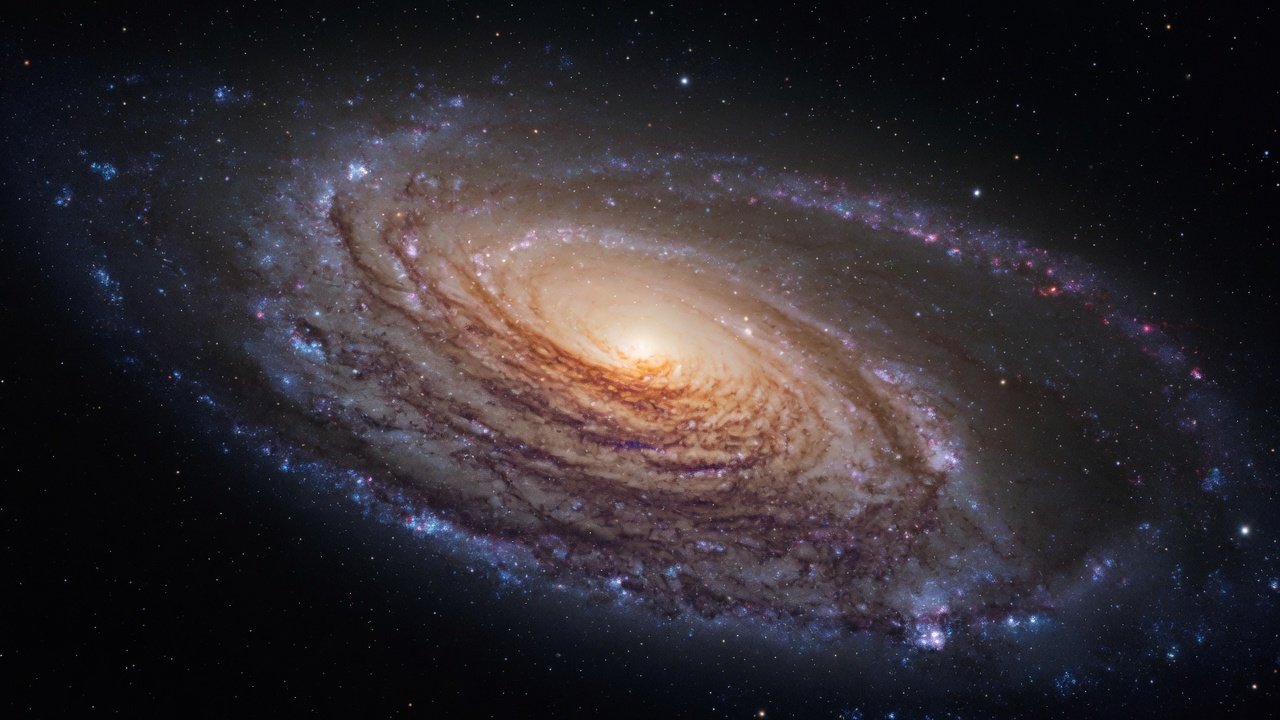
The James Webb Space Telescope launched on December 25, 2021, carrying 344 single-point failures — individual mechanisms that each had to work, with no repair mission possible, 1.5 million kilometers from Earth. Every one of them worked. It remains one of the highest-stakes deployment sequences ever executed, and it bought humanity a new instrument class.
The machine
Webb's primary mirror is 6.5 meters across — too large for any rocket fairing, so it's built from 18 gold-coated beryllium hexagons that folded for launch and aligned in space to within nanometers, acting as a single optical surface. Gold, because Webb is an infrared telescope: it observes from 0.6 to 28.5 microns, the wavelength band where the earliest galaxies' light arrives after being stretched by cosmic expansion, and where cool things — forming planets, exoplanet atmospheres, dust-shrouded star birth — actually glow.
Infrared is also why everything about Webb's architecture follows from one constraint: the telescope must be colder than about 50 kelvin, or its own heat would drown the signal. Hence the five-layer sunshield the size of a tennis court, which keeps a permanent shadow over the optics; hence the orbit around Sun-Earth L2, ~1.5 million kilometers out, where Sun and Earth stay on the same side and the cold side faces deep space. The mid-infrared instrument runs colder still, cryocooled below 7 K. First images arrived July 12, 2022, and the commissioning verdict was that performance exceeded specification.
What it actually changed
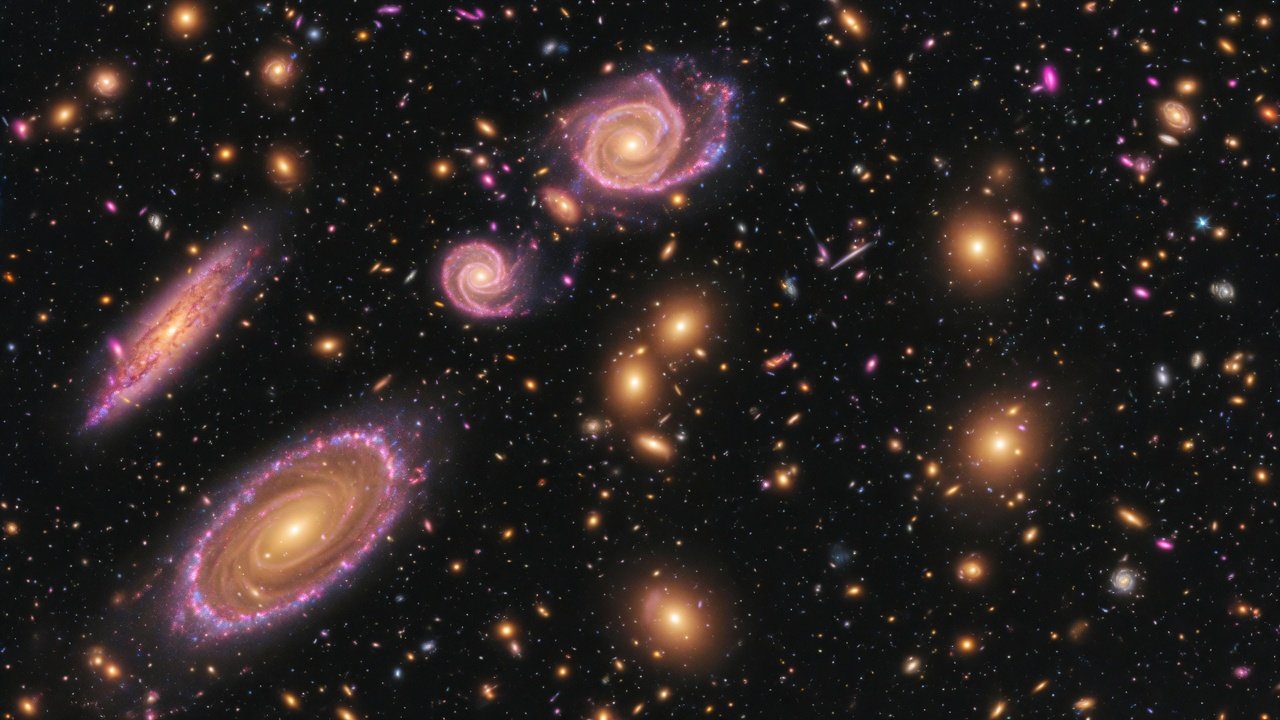
Three things, concretely. First, the early universe: Webb found galaxies in the first few hundred million years after the Big Bang that are brighter and more mature than galaxy-formation models predicted — not breaking cosmology, but forcing real revisions to how fast early star formation ramped. Second, exoplanet atmospheres: Webb delivered the first clear detection of carbon dioxide in an exoplanet atmosphere (WASP-39 b) and then sulfur dioxide — evidence of photochemistry, chemistry driven by starlight, on a world hundreds of light-years away. Transmission spectroscopy went from heroic to routine. Third, the deep fields: point Webb at a patch of "empty" sky and every smudge resolves into a galaxy, thousands per image, with gravitational lensing arcs bending the light of galaxies behind galaxies.
Why it matters to a builder
Webb is the canonical case of a system whose architecture is fully derived from one hard constraint — stay under 50 K — the way good designs flow from their tightest requirement rather than fighting it. It's also a study in irreversible deployment: 344 single-point failures, no rollback, mitigated by years of ground rehearsal and exhaustive testing. When you can't iterate in production, you buy reliability with verification — and the payoff window can be decades long.